Armenian Parliamentary Elections 2012: The Fletcher Connection

Armenian Parliamentary Elections 2012: The Fletcher Connection

Armenians go to the polls to elect their fifth National Assembly on Sunday, May 6. Since its independence in 1991 after the fall of the Soviet Union, Armenia has suffered from rampant corruption and bureaucratic ineptitude in addition to larger economic issues and a devastating 1988 earthquake. Moreover, a territorial dispute involving neighboring Azerbaijan and a troubled historical legacy with Turkey have sealed shut a majority of the landlocked country’s borders.

Suffice it to say, then, that the Republic of Armenia has more than its fair share of domestic and international issues. Unfortunately, national and local voting has proven to be among them. The credibility of most Armenian governments has been wanting due to lackluster elections. Most politicians likewise fail to inspire confidence in the people.

read the rest

Genocide Politics and People Power

Thoughts from Ahmet Altan’s Lecture at ALMA

On Saturday evening, Jan. 28, the Armenian Library and Museum of America (ALMA) in Watertown hosted Ahmet Altan, the editor of the liberal Turkish newspaper Taraf, well known in Armenian circles as it often publishes material pertinent to and resonating with our cause. The event was organized by the Friends of Hrant Dink, in the memory of that seminal figure gunned down five years ago. After remarks by Barbara Meguerian and Harry Parsekian, noted historian Taner Akcam of Clark University praised the speaker for his work and went so far as to refer to Taraf as something of a political party, since it serves as a powerful outlet for the voice of the opposition in Turkey.

read the rest

“73. Waverley.”

“73. Waverley.”

I could see from the top of the stairs that one of my buses was waiting. Someone had just come out of the turnstiles from the metro at Harvard and was making a mad dash for the lower bus tunnel. We were both underground. He could see the bus from where he was. I could see him.

I did not want to make a run for it, however. For one, it’s a little undignified, I find, and, well, I was in no hurry. Sure, I’d miss that bus and maybe wait ten or twelve minutes for another, maybe even less. Meanwhile, there’s a copy of Anna Karenina in my bag, halfway read, which means still a lot more to go. Continue reading

Following the Remarkable Footsteps of Our Merchant Ancestors

Following the Remarkable Footsteps of Our Merchant Ancestors

CAMBRIDGE, Mass. (A.W.)–Sebouh Aslanian, the recently appointed assistant professor and Richard Hovannisian Term Chair in modern Armenian history at UCLA, lectured at Harvard on Sept. 14 on the fascinating story of the Armenian merchants of New Julfa (Nor Jugha). Stretching across the Mediterranean, down through the Indian Ocean and all the way to the Pacific, encompassing the Middle East, the Russian Empire, India and Tibet, and the Far East, the Julfa Armenians commanded a vast and active network of trade in early modern times.

read the rest

The Recognition of Freedom: Nagorno Karabakh’s case

The Recognition of Freedom: Nagorno Karabakh’s case

This year marks the twentieth anniversary of the collapse of the Soviet Union and the independence of a number of countries that used to form part of the USSR. What was perhaps one of the most unexpected events of the twentieth century resulted in the statehood of fifteen republics – fifteen states recognized by the international community, by the world at large, along with four countries that yet often go by the moniker of being stuck in “frozen conflicts”.

read the rest

What Makes a Diaspora?

What Makes a Diaspora?

I am a member of a mailing list and Facebook group that shares news articles and other interesting bits of information pertaining to the Armenian world. One of the topics of discussion that took place recently was the status of the Armenians of Constantinople, the Bolsahays. A recent article in the Armenian Weekly also took on this question, as did the discussions that stemmed from the visit of Armenian Minister of Diaspora Hranush Hakobyan to Istanbul not too long ago.

read the rest

Qu’est-ce qui fait une diaspora ?

Je suis l’un des membres d’une liste d’envoi et d’un groupe Facebook qui partage des articles de journaux et autres éléments d’information intéressant le monde arménien. L’un des sujets de discussion abordé récemment était le statut des Arméniens de Constantinople, les Bolsahays. Un récent article d’Armenian Weekly, en commentaire à la visite de la ministre de la diaspora Hranush Hakobyan à Istanbul d’il y a peu de temps, traite également de cette question.

lire la suite

What makes a Diaspora?

I am a member of a mailing list and Facebook group that shares news articles and other interesting bits of information pertaining to the Armenian world. One of the topics of discussion that took place recently was the status of the Armenians of Constantinople, the Bolsahays. A recent article in the Armenian Weekly also took on this question, as did the discussions that stemmed from the visit of Armenian Minister of Diaspora Hranush Hakobyan to Istanbul not too long ago.

read the rest

Zimbabwe. Impressions and Observations. July-August 2011

Zimbabwe. Impressions and Observations. July-August 2011

I have had the great pleasure of finding myself in Zimbabwe for a couple of weeks, and consequently have ended up taking note of certain things. Many are general, some are specifically through the eyes of an Armenian from Delhi. Regardless, I felt that it might be of interest to share my observations and impressions.

To those Zimbabweans whom I know, I hope you will forgive me if it seems that I have taken a strange view of your country at times. It’s just that I did not know what to expect exactly, so some of the reactions I have had were raw. I read a memoir before arriving by an American journalist who was kicked out of the country in the early 2000s, and I also did some research on more recent political and social developments. But, of course, that’s different than coming to live in a house in Harare, while also playing the tourist.

The very first impression I got was the lovely, lovely weather, and the lush greenery. The air is so light here, that’s the only word I can use to describe it. It is winter this time of year, so it can get chilly in the mornings and at night, but even so, the freshness of the climate, the trees and flowers are all very delightful indeed, even if it does get dark sooner than I would like (the country is not all that far from the Equator). Continue reading

Տէլի Ճան՝ Դիլիջան | Deli Can – Dilijan

Տէլի Ճան՝ Դիլիջան | Deli Can – Dilijan

Ընկերոջս հետ որոշուեց գնալ Բերդ քաղաք՝ մեծամասնաբար իմ քմահաճութիւնից ելնելով, քան զի երբէք այդտեղ չէի եղել ու ուզում էի պնդել որ «ամէն տեղ եղել եմ Հայաստանում»: Մի քիչ դժուար է, ի հարկէ, նման յանդուգն յայտարարութիւն անել, սակայն՝ Բերդ գնալուց յետոյ, այդ յաւակնութեամբ հանդէս եմ գալիս:

Յամէնայն դէպս, շատ հաճելի օր անցաւ մեզ: Սեւանի ճանապարհը բռնեցինք, Դիլիջանով անցանք, գնացինք Իջեւան ու շարունակեցինք դէպի Ադրբեջանական սահմանը, որտեղից ճամբան շեղւում է դէպի Բերդ: Իրականում ես շատ դրական տպաւորութիւն ստացայ այդ ճանապարհի մաքրութեամբ ու նաեւ ընդհանրապէս Բերդ քաղաքից: Շատ աւելի խեղճ ու տխուր տեղ էի սպասում, բայց արի ու տես որ բաւականին աշխոյժ քաղաք է: Իրենց գլխաւոր փողոցում լիքը մարդ կար, առուտուր, եւ այլն:

Վերադարձի ճանապարհին, նկատեցի որ Դիլիջանում խորհրդային մի ֆիլմի յուշարձան կար, որ ուզեցի նկարել: Ընկերս դարձեալ քմահաճութիւնս հանդուրժեց՝ նաեւ դուրս հանելով իր սիրուն, արհեստավարժ խցիկը: Ես ելայ, մի քանի պատկեր քաշեցի, ու վերադառնում էի մեքենայ, երբ յանկարծ ետեւից մէկ, երկու, երեք ոստիկան յայտնուեցին, կանչում էին մեզ: Եա՛: Արդեօք ի՞նչ էին ուզում, ի՞նչ սխալ եմ գործել, ի՞նչ կարգի կաշառք էին պահանջելու…

Այդ ամէնը մտքովս էին անցնում, երբ ոստիկաններից մէկը նկարուելու ցանկութիւնը ներկայացրեց: «Մեծ սիրով, խնդրեմ»-ներով ետ գացինք յուշարձան, սրանք տեղաւորուեցին, ու մի քանի նկար առի: Բայց յետոյ իրենց ո՞նց էր հասնելու նկարը: Սրանք իրար անցան: E-mail-ից, համակարգիչից լուր չունէին: Սկսեցին զանգել սրան-նրան: Վերջապէս ինձ յայտնեցին իրենցից մէկի զարմիկի Skype-ի անունը: «Շատ բարի»-ներով էլ մենք շարունակեցինք մեր ճանապարհը դէպի Երեւան:

Սակայն Skype-ով նկար ուղարկել կը լինի՞ միթէ: Չգիտեմ: Ուստի այս գրութիւնը: Նկարը տակը կպցուած է: Եթէ ձեւ կայ որ Skype-ով նկար ուղարկուի առանց Skype-ի հաշիւ ունենալու, խնդրում եմ տեղեկացրէք ինձ: Եթէ ձեզանից մէկը ունի Skype-ի հաշիւ ու կ’անի այդ գործը, շատ շնորհակալ կը լինեն ես ու այդ երեք հոգին (զարմիկը ինչքան շնորհակալ կը լինի, չեմ կարող ասել): Եթէ կարդացող կայ ով Դիլիջանում է կամ այնտեղով է անցնելու եւ ում ծանօթ են կամ կարող են ծանօթ լինել այս երեք ոստիկանները, խնդրում եմ նեղութիւնը քաշէք մի ձեւ նկարը իրենց հասցնելու: Թող ուրախանան, դէմ չեմ:

Իսկ այսպիսի ու նման դէպքեր հետս միայն Հայաստանում են պատահում: :-)


My friend and I decided to visit the city of Bért, mostly due to my own caprices, as I had never been there before and wanted to claim that I have been everywhere in Armenia. It is a little difficult, of course, to make such a reckless declaration; however, upon visiting Bért, I am presenting myself in such an ambitious light.

Anyway, the day went very well. We took the road to Sevan, passed through Dilijan, on to Ichevan, and continuing further to the border with Azerbaijan, from where the road twists away towards Bért. I actually got a very positive impression by the maintenance of that road and generally from the city. I was expecting Bért to be much sadder a place, more poverty-stricken, but come to find out that it is quite an active city. Their main street was full of people, and shops, etc.

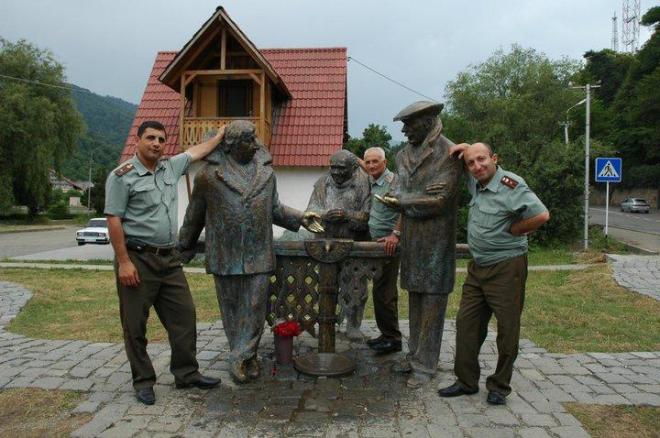
On the way back, I noticed a statue commemorating an old Soviet film in Dilijan, which I felt like photographing. My friend once more gave in to my capriciousness, even handing over his beautiful, professional camera. I got out, took a few pictures, and was on my way back to the car, when suddenly one, two, three policemen showed up, calling to us from behind. I wasn’t prepared for anything like that. What could they possibly want from us? Did we break any laws? Were they going to ask for some sort of a bribe…?

These thoughts were passing through my mind, when one of them expressed the desire to be photographed. “Well, of course,” I said, and off we were to the statue, where the three of them struck a pose, and I took a few pictures. But how were they to receive those pictures? The old Keystone Cops immediately came to my mind. These guys didn’t know what to do. They didn’t have much in the way of e-mail or computers. They started to make some phone calls. Finally, they told me the Skype name of the nephew of one of them. Very well. And off my friend and I were, back to Yerevan.

But is it possible to send pictures via Skype? I don’t know. Hence this note. The picture is pasted below. If there is a way to send pictures to a Skype account without having one one’s self, please let me know. If one of you has a Skype account and would make that effort, I and three other people will be very grateful (I cannot speak for the nephew). If anyone reading this is in Dilijan or will be passing through there and knows or may know these three police officers, kindly take the trouble to get this picture to them somehow. I’d like for them to be happy with this little bit of work.

Oh, and it goes without saying that these sorts of things happen to me only in Armenia. :-)
Yerevan, July 2011. Photo Essay II

Yerevan, July 2011. Photo Essay II

Yerevan is not a very large city, but there is no lack of eye-catching and thought-provoking things around here. Some of the pictures below reflect the general surreal and out of place elements of life in Armenia, while others offer reflections on aspects of politics and society. And then, of course, I find some things to be simply funny or cool.

«Գտիր քո G-կետը»…! Continue reading

Yerevan. Photo Essay. July 2011

Yerevan. Photo Essay. July 2011

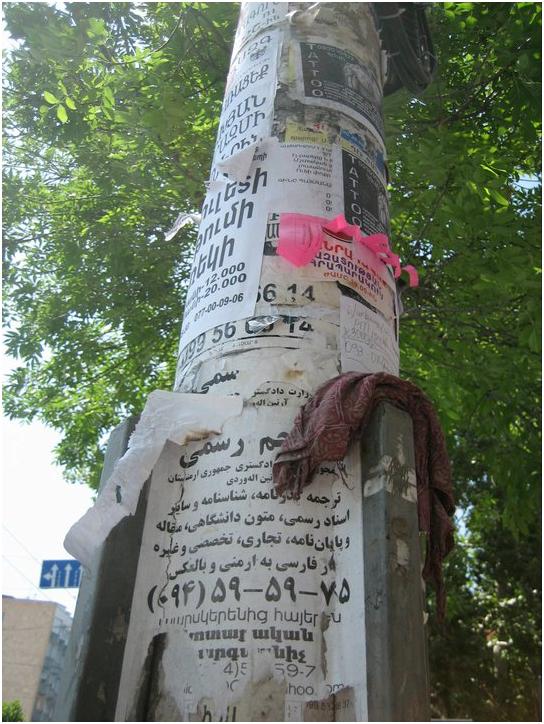
All right, so I am cheating with this first one. The truth is, I was seeking out that random flyer in Persian which I had seen the other day, but it had already been removed from where I had seen it. Suspicious. This particular flyer is advertising official translation services, which is less of an indication of a growing Farsi-speaking community in Yerevan. But still, it does imply something. The light pole on which the flyer is stuck is also advertising trips to the Georgian Black Sea coast, tatoo services, an opposition rally, and a random message by an extremist group, which, I suspect, removed that Persian flyer which I was seeking earlier. The reason for that suspicion will become clear. There is also a rag. Continue reading