Who is an Armenian Gharib in the 21st Century?

Who is an Armenian Gharib in the 21st Century?

I was recently quite moved by one of the fantastic posts of the Armenian Museum of America’s Sound Archive series. It featured the voice of Karnig Kuludjian from 1945. A genocide survivor who ended up in the Chicago area, Kuludjian expresses confidence on the disc now online that the war in Europe would soon come to an end in favor of the Allies and the boys would return home. It is a fun recording, quite organic, made at home — a rarity for the era. You can hear the muffled voices of people in the background, laughing at Kuludjian’s amusing observations. The disc becomes even more compelling with a wonderful à propos song: Gharib Akhper, a work addressed to, roughly, a brother in exile, often framed as brothers in arms, expressing hope that they will come back. It is a song I have heard my father sing many times around many tables. So, I got a good sense of what that gathering in Chicago eighty years and more ago must have been like — beautiful, charming, melancholic.

read the rest

Zohrab Information Center adds Liturgy and Liturgical Materials Collection

Zohrab Information Center adds Liturgy and Liturgical Materials Collection

A collection of mostly unpublished materials related to the liturgy and worship services of the Armenian Church is now available for the interested public to view at the Zohrab Information Center. The Liturgy and Liturgical Materials Collection was processed by Andrew Kayaian, librarian of St. Vladimir’s Orthodox Theological Seminary and St. Nersess Armenian Seminary, and Nareg Seferian, who completed his doctoral studies at Virginia Tech’s School of Public and International Affairs in 2023.

The collection consists of four series. The first brings together a number of documents pertaining to the Badarak or the Divine Liturgy – that is, the service with which the faithful are most familiar from ordinary Sundays. Armenian churches tend to have books in their pews with the text and order of the Badarak, often in Armenian with translation and transliteration so that parishioners can follow along. These official pew books are usually published by the various dioceses of the Armenian Church and have made their way into library collections around the world. What makes the Zohrab Information Center’s collection unique is that it consists of more ephemeral or local materials put together by individual priests, parishes, or others for specific occasions and local needs, which otherwise would be lost or unknown if not gathered together here. This series in the collection also includes materials related to the various aspects of Sunday worship, such as Gospel readings, the confession, and the creed.

read the rest

Zohrab Information Center adds Plays and Performances Collection

Zohrab Information Center adds Plays and Performances Collection

A unique collection of theatrical works is now available for the interested public to view at the Zohrab Information Center. The Plays and Performances Collection was processed by Nareg Seferian, who completed his doctoral studies at Virginia Tech’s School of Public and International Affairs in 2023.

The tradition of Armenian theater is a venerable one. Records exist of dramatic compositions and performances in ancient times, while modern works testify to the rich tapestry of the development of Armenian culture in the Ottoman, Romanov, and Qajar realms over the course of the 19th century and into the 20th – presented most notably in Modern Armenia Drama (Columbia University Press, 2001) edited by Prof. Nishan Parlakian and Prof. Peter Cowe. It would not be an exaggeration to say that the activities of Armenian playwrights, actors, and producers – to say nothing of the public – left a lasting impact in the world of theater throughout Turkish, Russian, and Persian society, certainly in the Ottoman Empire.

read the rest

This Tarkmanchats, let’s celebrate Armenian names

This Tarkmanchats, let’s celebrate Armenian names

My name is Nareg Hovsep Seferian.

It ends in “-ian” – characteristic for most Armenian surnames, also with its other spelling, “-yan.”

“Seferian.” That means “traveler.” My ancestors were probably merchants. Little surprise there for any Armenian. The sefer part is ultimately an Arabic root, but it surely became a surname for Armenians under Turkish or Persian rule. “Safarian” is another version. So, alongside the Armenian suffix, that surname reflects the mark of medieval and modern empires and neighboring cultures.

“Hovsep,” my middle name, is Armenian for “Joseph” – a name from the Bible, Hebrew via Greek. This is an indication of how Armenians have long formed part of the broader cultural landscape around the Mediterranean and Middle East. It also indicates the Christian heritage which forms a significant part of the Armenian identity. It is my father’s name. And my nephew’s name – the first-born grandson of my immediate family. That tells you something about naming practices prevalent in Armenian culture.

read the rest

Երբ Երեւանում կար ընդամենը 402 հեռախոսահամար

Երբ Երեւանում կար ընդամենը 402 հեռախոսահամար. 1927 թվական

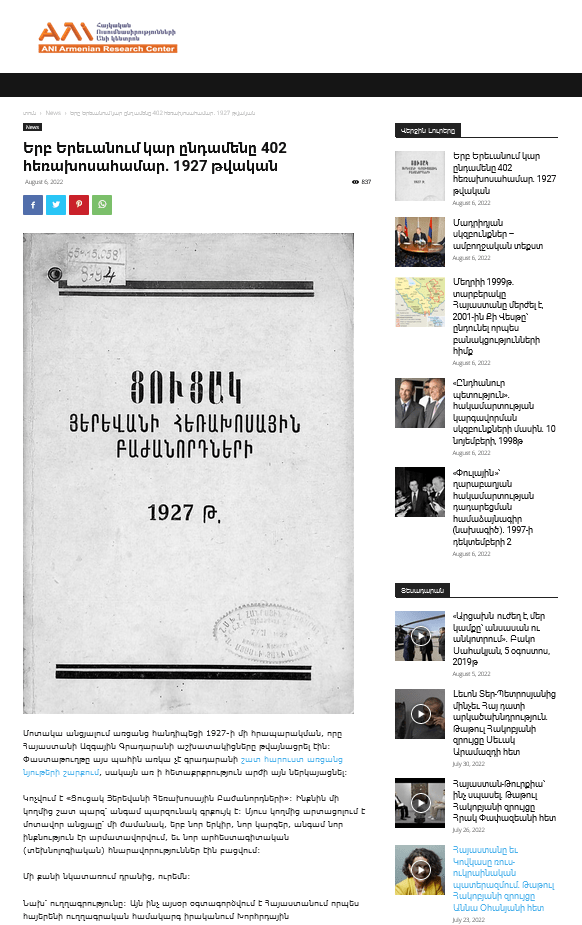
Մոտակա անցյալում առցանց հանդիպեցի 1927-ի մի հրապարակման, որը Հայաստանի Ազգային Գրադարանի աշխատակիցները թվայնացրել էին: Փաստաթուղթը այս պահին առկա չէ գրադարանի շատ հարուստ առցանց նյութերի շարքում, սակայն առ ի հետաքրքրություն արժի այն ներկայացնել:

Կոչվում է «Ցուցակ Յերեվանի Հեռախոսային Բաժանորդների»: Ինքնին մի կողմից շատ պարզ՝ անգամ պարզունակ գրքույկ է: Մյուս կողմից արտացոլում է մոտավոր անցյալը՝ մի ժամանակ, երբ նոր երկիր, նոր կարգեր, անգամ նոր ինքնություն էր արմատավորվում, եւ նոր արհեստագիտական (տեխնոլոգիական) հնարավորություններ էին բացվում:

Մի քանի նկատառում դրանից, ուրեմն:

կարդալ մնացածը

Independence and Indigeneity

Independence and Indigeneity

Today is Armenia’s independence day – the thirtieth anniversary, in fact, of this latest manifestation of a place called Armenia on the world map. It has not been an easy three decades, and the last twelve months and more have been marked with a pandemic and a devastating war and its aftermath, among other challenging phenomena.

For the past two weeks now, I have been in Kapan, in the province of Siunik in the south of the country, doing fieldwork for my dissertation. So far, I have conducted about a dozen interviews and had numerous conversations with locals about Siunik and the experience of the new geography of the province and the country since last year. That’s the over-arching theme of the dissertation. Although I do not have many substantial conclusions to draw as of yet, one common theme that has appeared is indigeneity. It is a prevailing part of Armenian discourse that the Armenians are the original inhabitants of this land, their historical homeland.

read the rest

Some Thoughts on “Whiteness”, Privilege, and Related Categories in Discourse in the United States

Some Thoughts on “Whiteness”, Privilege, and Related Categories in Discourse in the United States

I have been exposed to numerous news stories, documentaries, long-form articles, and other media products about racism in the United States over the past year and more, ever since George Floyd and Black Lives Matter. It’s not that I had been unaware of racism in America, but I now find myself more educated about the various social, political, cultural, and legal facets of this complex and multi-layered phenomenon. Many questions remain for me, popping up amidst mixed and conflicted thoughts and feelings as I try in particular to tie in the narratives I’ve come across with the experience of the Armenian community in the United States.

At the outset, I have to emphasise that I am not American at all. I have spent quite a few years in this country, but always as a student – an observer and a learner in more ways than one. So my perspectives are that of an outsider.

I remember one of the first times I devoted some thought to the conceptualisation of race in the United States. It was the 2010 census. I filled it in as everyone was required to do so. There were a few basic questions, and then a long list of options for “Race”. It seemed like such a lop-sided form to me. What kind of data would come out of it? As far as I could tell, it would compute how many people were in a given space at that prescribed moment, how old they were, and then lots of variations in how they could label themselves. What purpose could that latter bit serve in public policy?

read the rest

Four Reasons Why the Public Recognition of the Armenian Genocide Matters

Four Reasons Why the Public Recognition of the Armenian Genocide Matters

It is April 24 soon – Armenian Genocide commemoration day.

Every year, the public remembrance of the victims of a horrific crime during a tumultuous period becomes political in many places Armenian communities call home, not the least of which in the United States.

The White House has been issuing statements annually on April 24 for more than a quarter of a century now, but always avoiding the term “Armenian Genocide”. The massacres and deportations are duly and solemnly condemned by each president. However, calling it by that explicit term – genocide – would be detrimental to relations with Turkey, because the government in Ankara has long held either denialist positions or has pushed forward modified arguments about the broader historical context, general widespread suffering and chaos during the First World War, and so on. It is comparatively rare in Turkey nowadays to hear outright denial of killings, dispossession, and the exile from Anatolia and Asia Minor of Armenians, Greeks, Assyrians, and other communities in 1915 and later. But describing it as genocide remains taboo in most Turkish circles.

There have been reports that President Biden will invoke “the g-word” this year. Congress, for its part, has acknowledged the Armenian Genocide on a few occasions, most recently in October, 2019, when relations with Turkey were at a low. Almost all state governors or state houses have made various proclamations or passed resolutions on the Armenian Genocide during the last few decades, as have many city-level governmental bodies throughout the United States. However, there is no sustained, federal Armenian Genocide policy position consistently adopted and expressed by the legislative and executive branches in Washington. It remains a challenge at the forefront of the impressive and moving efforts undertaken by the Armenian-American advocacy and activist community.

The broader question lingers: why even acknowledge the Armenian Genocide? What’s the point of any public or national commemoration in the US or elsewhere? It happened more than a hundred years ago. Yes, it was tragic, it should be condemned, the community has every right to hold memorial services. But what makes it a live public, political issue?

I think that is a reasonable question. Here are four reasonable responses.

read the rest

Shades of Sèvres

Shades of Sèvres

In Turkish public discourse, “Sèvres Syndrome” refers to the looming legacy of the agreement signed in a suburb of Paris in 1920 which envisioned carving up the crumbling Ottoman Empire. Although it gives off an impression of being conspiratorial at first blush, political leaders in Turkey do have a basis in bringing up the notion of foreign powers planning to dismember the country. For over a century, the Eastern Question was on the agenda in the corridors of power in London, Paris, Vienna, St. Petersburg, and elsewhere. Geopolitical rivalries about this and other matters came to a head with the First World War, with mixed outcomes for all the empires involved. The Republic of Turkey – forged out of the Treaty of Lausanne in 1923 – has far less reason to suspect aspirations regarding its territory today, Kurdish separatists notwithstanding.

A sovereign Armenian state was foreseen by the Treaty of Sèvres, to include vast swathes of modern-day eastern Turkey. By contrast, Lausanne did not even involve any Armenian delegates during its negotiations, given the inroads made by a resurgent Soviet Russia and the consequent collapse of the infant Armenian republic in the Caucasus next door. As a result of the tumultuous first quarter of the 20th century (among other eras), hindsight and the notion of “historical justice” and “the restoration of historical justice” is ingrained in Armenian public discourse, even featuring in the country’s declaration of independence from the USSR. Nothing could be more emblematic of such a sentiment than Sèvres, which, unlike in Turkey, is shorthand for a missed opportunity alongside insufficient support or intervention from any of the Great Powers, the United States, or the West in general.

read the rest

Sevr’in Tonları

Sevr’in Tonları

(Türkçe: 2023-03-15)

Türk kamuoyunda “Sevr Sendromu” 1920 senesinde Paris’in bir banliyösü olan Sevr’de imzalanan ve yıkılmakta olan Osmanlı İmparatorluğu’nu parçalara bölmeyi tasavvur eden antlaşmanın gerçeğe dönüşmesinden duyulan korkuyu tanımlar. Her ne kadar ilk bakışta bir komplo teorisi olarak görünse de Türkiye’deki siyasi liderlerin dış mihrakların ülkeyi bölme planlarını gündeme getirmelerinin tarihsel dayanakları vardır. Yüz yılı aşkın süredir Doğu Sorunu Londra, Paris, Viyana, St. Petersburg gibi merkezlerdeki güç odaklarının gündeminde bulunmuştur ki Birinci Dünya Savaşı ile jeopolitik düşmanlıklar doruğa ulaşmıştır.

metnin devamı

Identity, Narratives, and Symbolism in Conflict Resolution

Identity, Narratives, and Symbolism in Conflict Resolution

Too often the Karabakh conflict is reported in the Western media with great emphasis on oil and gas pipelines. While energy infrastructure is indeed a significant component of that complex issue, the rhetoric from the political leaders and from common voices in the region hinge overwhelmingly around national identity, historical narratives, and symbolism.

For example, the President of Azerbaijan complained in his interview on Al Jazeera English that towns and villages in the region have been re-named in the past decades. Now we see that the Azerbaijani armed forces claim to have taken over the village of Mataghis/Madagiz and Ilham Aliyev’s official Twitter account very soon proclaims a new name for it, rather – “I reinstate the historical name … Sugovushan”.

read the rest