
All | Ամբողջը
Երբ Երեւանում կար ընդամենը 402 հեռախոսահամար
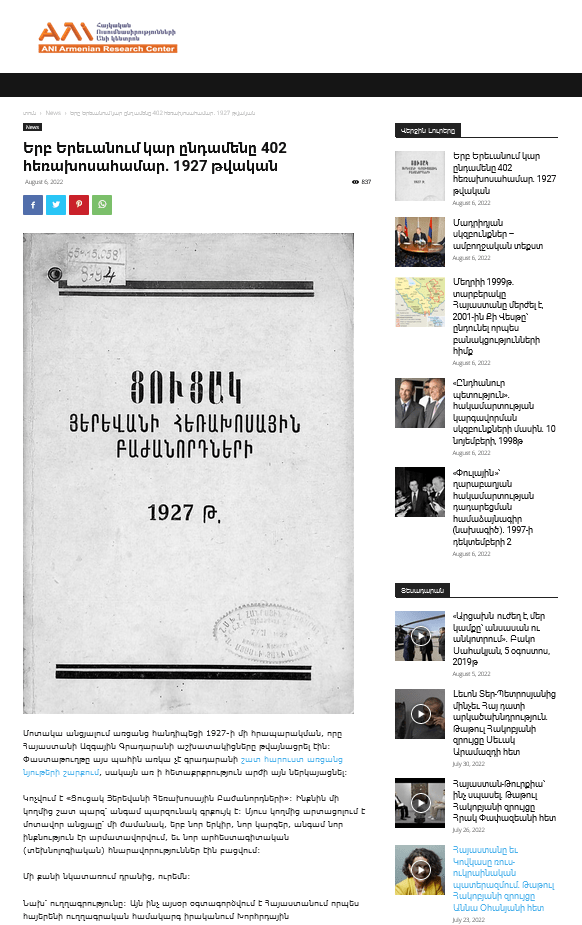
Երբ Երեւանում կար ընդամենը 402 հեռախոսահամար. 1927 թվական
Մոտակա անցյալում առցանց հանդիպեցի 1927-ի մի հրապարակման, որը Հայաստանի Ազգային Գրադարանի աշխատակիցները թվայնացրել էին: Փաստաթուղթը այս պահին առկա չէ գրադարանի շատ հարուստ առցանց նյութերի շարքում, սակայն առ ի հետաքրքրություն արժի այն ներկայացնել:
Կոչվում է «Ցուցակ Յերեվանի Հեռախոսային Բաժանորդների»: Ինքնին մի կողմից շատ պարզ՝ անգամ պարզունակ գրքույկ է: Մյուս կողմից արտացոլում է մոտավոր անցյալը՝ մի ժամանակ, երբ նոր երկիր, նոր կարգեր, անգամ նոր ինքնություն էր արմատավորվում, եւ նոր արհեստագիտական (տեխնոլոգիական) հնարավորություններ էին բացվում:
Մի քանի նկատառում դրանից, ուրեմն:
Erdoğan and Pashinyan look forward as public opinion looks back
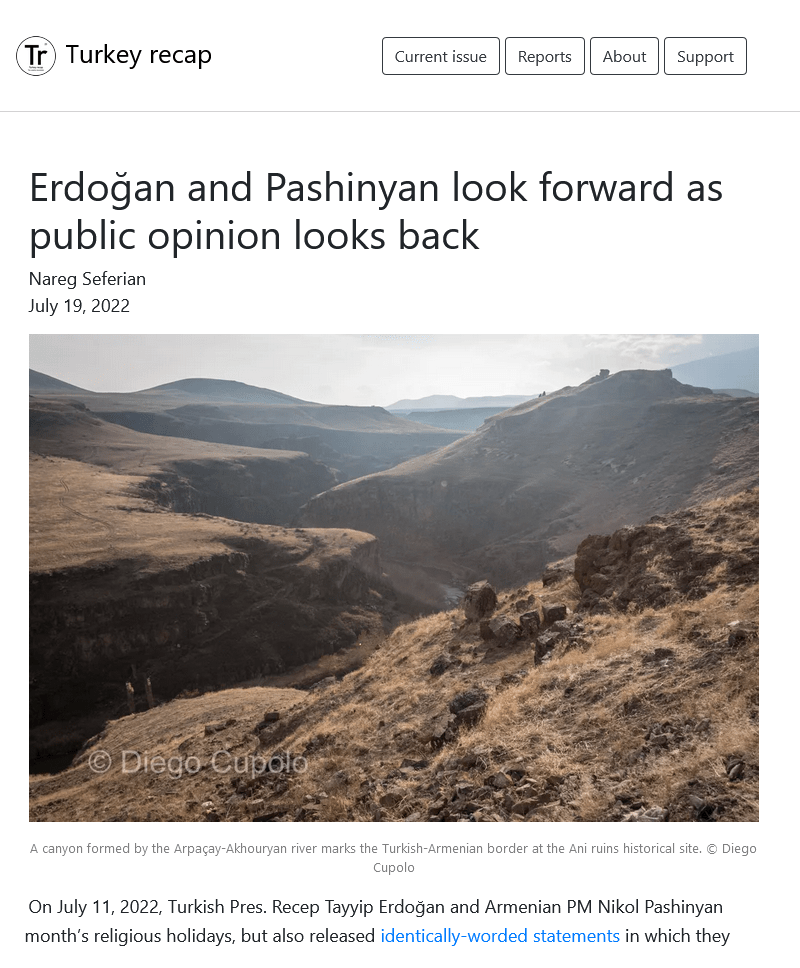
Erdoğan and Pashinyan look forward as public opinion looks back
On July 11, 2022, Turkish Pres. Recep Tayyip Erdoğan and Armenian PM Nikol Pashinyan held their first phone call ever. The leaders not only exchanged polite wishes for the month’s religious holidays, but also released identically-worded statements in which they “emphasized the importance” of the normalization process between their countries.
As the governments of Turkey and Armenia take cautious steps towards normalization, public opinion appears unconvinced by the process, with recent polls on both sides of the border underlining long-held negative sentiments between the two nations despite the recent progress. Along with the possibility of Russian and Azerbaijani influence on negotiations, the ongoing Turkey-Armenia talks will be no easy task, and the public knows it.
Shifts in Territorial Discourse over Southern Armenia

Shifts in Territorial Discourse over Southern Armenia
On November 16, 2021, clashes erupted between Armenian and Azerbaijani armed forces near the town of Sisian in southern Armenia, in the province of Siunik. This episode of fighting was notable as the worst altercation since the end of the Second Karabakh War of 2020. The Armenian side reported six soldiers killed and 13 taken captive, with 24 missing, while seven killed and ten wounded was the official count from Azerbaijan. Russian mediation resulted in a halt to the hostilities.
What happened in Siunik – indeed, what has been happening across that border region since May, 2021 – is directly related to the Nagorno-Karabakh conflict. The dispute over Nagorno-Karabakh has numerous complexities. One is the inter-play between claimed borders and effective control. The unrecognised authorities in Stepanakert claimed the territory of the Nagorno-Karabakh Autonomous Oblast (NKAO) of Soviet Azerbaijan, plus the Shahoumyan region to the north. Following the cease-fire in 1994, though deprived of some slivers of NKAO territory in the east and north-east, the Nagorno-Karabakh Republic or Artsakh had at the same time effective control, in whole or in part, over seven additional districts of what used to be Soviet Azerbaijan proper – the areas marked in light beige on the map below outside the lines of the former NKAO.
Armenian and Turkish narratives: clash or normalization?
For the third time in three decades, Ankara and Yerevan are trying to normalize relations. In a region plagued by rivalry, distrust, and historical grievances, this will be no easy feat. In #TOPTALK, Rusif Huseynov discusses the topic with Nareg Seferian, a U.S.-based Armenian scholar, whose expertise covers the Armenia-Turkey ties among others.
Սյունիքի անվտանգությունը, մարդիկ ու տնտեսությունը․ զրույց հետազոտողի հետ
Սյունիքի անվտանգությունը, մարդիկ ու տնտեսությունը․ զրույց հետազոտողի հետ
ԱՄՆ-ի Virginia Tech համալսարանի ասպիրանտ Նարեկ Սէֆէրեանը ներկայում աշխատում է «Սյունիքի՝ պատերազմից հետո ի հայտ եկած նոր սահմանները» աշխատության վրա։ ՍիվիլՆեթի Գևորգ Թոսունյանի հետ զրույցում նա խոսում է Սյունիք կատարած այցի ընթացքում կատարած իր ուսումնասիրությունների մասին։
Անվտանգության զգացումը պակասել է
Անվտանգության զգացումը պակասել է
ԱՄՆ «Virginia Tech» համալսարանի ասպիրանտ Նարեկ Սէֆէրեանի հետ զրուցել ենք Սյունիք կատարած նրա այցի նպատակներից։ Զրույցի ընթացքում շոշափել ենք նաև հասարակության շրջանում տիրող տրամադրությունների մասին որոշ հարցեր։
SAS Podcast #56 – Alakananda Nag
SAS Podcast #56 – Alakananda Nag
Alakananda Nag (Photographer, Filmmaker, Creative Director), Armenians of Calcutta (Calcutta: Alakananda Nag, 2021)
Interviewed by Nareg Seferian (School of Public and International Affairs, Virginia Tech).
Independence and Indigeneity
Today is Armenia’s independence day – the thirtieth anniversary, in fact, of this latest manifestation of a place called Armenia on the world map. It has not been an easy three decades, and the last twelve months and more have been marked with a pandemic and a devastating war and its aftermath, among other challenging phenomena.
For the past two weeks now, I have been in Kapan, in the province of Siunik in the south of the country, doing fieldwork for my dissertation. So far, I have conducted about a dozen interviews and had numerous conversations with locals about Siunik and the experience of the new geography of the province and the country since last year. That’s the over-arching theme of the dissertation. Although I do not have many substantial conclusions to draw as of yet, one common theme that has appeared is indigeneity. It is a prevailing part of Armenian discourse that the Armenians are the original inhabitants of this land, their historical homeland.
Some Thoughts on “Whiteness”, Privilege, and Related Categories in Discourse in the United States
Some Thoughts on “Whiteness”, Privilege, and Related Categories in Discourse in the United States
I have been exposed to numerous news stories, documentaries, long-form articles, and other media products about racism in the United States over the past year and more, ever since George Floyd and Black Lives Matter. It’s not that I had been unaware of racism in America, but I now find myself more educated about the various social, political, cultural, and legal facets of this complex and multi-layered phenomenon. Many questions remain for me, popping up amidst mixed and conflicted thoughts and feelings as I try in particular to tie in the narratives I’ve come across with the experience of the Armenian community in the United States.
At the outset, I have to emphasise that I am not American at all. I have spent quite a few years in this country, but always as a student – an observer and a learner in more ways than one. So my perspectives are that of an outsider.
I remember one of the first times I devoted some thought to the conceptualisation of race in the United States. It was the 2010 census. I filled it in as everyone was required to do so. There were a few basic questions, and then a long list of options for “Race”. It seemed like such a lop-sided form to me. What kind of data would come out of it? As far as I could tell, it would compute how many people were in a given space at that prescribed moment, how old they were, and then lots of variations in how they could label themselves. What purpose could that latter bit serve in public policy?
 naregseferian.com