All | Ամբողջը
The Warcast – Armenia and Azerbaijan Sign a Peace Deal
The Warcast – Armenia and Azerbaijan Sign a Peace Deal
On Aug. 8, the White House hosted the leaders of Azerbaijan and Armenia as they signed a peace deal. The agreement comes after decades of on-and-off fighting. Nareg Seferian joins the Warcast to walk through key parts of the agreement and regional implications.
Armenia, Turkey and the Zangezur corridor
Armenia, Turkey and the Zangezur corridor
Independent researcher Nareg Seferian joined Turkey recap editor-in-chief Diego Cupolo to discuss Armenia-Azerbaijan peace talks and their implications for the region.
They covered the July 10 meeting between Armenian PM Nikol Pashinyan and Azerbaijani Pres. Ilham Aliyev in Abu Dhabi and their efforts to finalize a peace agreement in the aftermath of the 2020 Nagorno-Karabakh War.
The peace talks will not only impact Eurasian energy and trade – through projects like the Zangezur corridor – but could also revive stalled normalization efforts between Turkey and Armenia.
All of the above has repercussions for the balance of power in the South Caucasus, where Russia, Iran, the European Union and the United States compete for influence.
Right of Return of the Armenians of Artsakh (Nagorno-Karabakh)

Right of Return of the Armenians of Artsakh (Nagorno-Karabakh)
Yeghia Tashjian, Salma Waheedi, Thomas Becker, Nareg Seferian
This work examines the forced deportation of Armenians from Nagorno-Karabakh
(also known as Artsakh in Armenian) by Azerbaijan, defining it as ethnic cleansing.
Drawing on Freedom House’s comprehensive report on the topic, and the resolution
passed by the International Association of Genocide Scholars (IAGS) on Nagorno-
Karabakh on September 20241, we conclude that Azerbaijan’s systematic attacks, forced
displacement, and destruction of cultural heritage are elements of a premeditated
campaign to expel Nagorno-Karabakh of its ethnic Armenians that triggers international
legal obligations, including a sustainable right of return. It brings together perspectives
from Armenian and international experts in political science and human rights law to
analyze the historical, legal, and geopolitical dimensions of the crisis. The paper
discusses the Armenian presence in the region from antiquity to the establishment of the
Nagorno-Karabakh Autonomous Oblast under Soviet rule, the independence movement,
and subsequent wars, focusing on the 2020 and 2023 conflicts.
The international response, including statements from the EU, UN, and ICJ,
highlights the obligation to ensure safe repatriation and the protection of Armenian rights
and cultural heritage. It underscores key violations of international law, including breaches
of the Universal Declaration of Human Rights, ICCPR, and Geneva Conventions, and
advocates for accountability in international legal forums.
The paper offers actionable recommendations for the United States government
to support the right of return, including securing international guarantees, advocating for
the preservation of Armenian cultural sites, and holding Azerbaijani officials accountable
for war crimes. It emphasizes the necessity of sustained international engagement, legal
mechanisms, and Armenian government support to ensure the dignity, security, and
cultural legacy of the displaced ethnic Armenians, laying the groundwork for a just
resolution and enduring peace in the region.
The Warcast – Azerbaijan Plane Crash

The Warcast – Azerbaijan Plane Crash
An Azerbaijan Airlines plane that was forced to crash-land in Kazakhstan last month, killing 38, appears to have been hit by Russian air defense systems. Nareg Seferian joins the WarCast to outline the implications for regional security.
The Nzhdeh Effect

With the ongoing security concerns and the potential for further and broader conflict, the period immediately following the end of 2020 had drawn more and more attention to Syunik —the pan-handle of southern Armenia. It’s the only land connection with Iran and, at that time, with Artsakh. Syunik is a space of key strategic importance for the country and for the region, including its industrial value mainly due to the numerous mines dotting its landscape.
In the autumn of 2021, ethnographic fieldwork in and around Kapan and Goris, the major cities of Syunik, brought to light the richness of local perceptions on the history and geography of the province.
“The other provinces of Armenia should not get upset,” a native of Syunik asserted. “It is the most important marz of the country.” According to another interviewee, “Syunik has the status of a super-marz.” Another favorite reprise among the local inhabitants is that “Syunik is the backbone of the country,”—a saying that is more widely cited in Armenia. The implication is that the country cannot exist without it. “Whoever heard of anyone standing confidently on their feet without a backbone, much less an entire country or nation?” This is an argument that is especially popular because it is associated with a key, if somewhat controversial, figure from the past century Garegin Nzhdeh (1886-1955).
Zohrab Information Center adds Liturgy and Liturgical Materials Collection

Zohrab Information Center adds Liturgy and Liturgical Materials Collection
A collection of mostly unpublished materials related to the liturgy and worship services of the Armenian Church is now available for the interested public to view at the Zohrab Information Center. The Liturgy and Liturgical Materials Collection was processed by Andrew Kayaian, librarian of St. Vladimir’s Orthodox Theological Seminary and St. Nersess Armenian Seminary, and Nareg Seferian, who completed his doctoral studies at Virginia Tech’s School of Public and International Affairs in 2023.
The collection consists of four series. The first brings together a number of documents pertaining to the Badarak or the Divine Liturgy – that is, the service with which the faithful are most familiar from ordinary Sundays. Armenian churches tend to have books in their pews with the text and order of the Badarak, often in Armenian with translation and transliteration so that parishioners can follow along. These official pew books are usually published by the various dioceses of the Armenian Church and have made their way into library collections around the world. What makes the Zohrab Information Center’s collection unique is that it consists of more ephemeral or local materials put together by individual priests, parishes, or others for specific occasions and local needs, which otherwise would be lost or unknown if not gathered together here. This series in the collection also includes materials related to the various aspects of Sunday worship, such as Gospel readings, the confession, and the creed.
Zohrab Information Center adds Plays and Performances Collection
Zohrab Information Center adds Plays and Performances Collection
A unique collection of theatrical works is now available for the interested public to view at the Zohrab Information Center. The Plays and Performances Collection was processed by Nareg Seferian, who completed his doctoral studies at Virginia Tech’s School of Public and International Affairs in 2023.
The tradition of Armenian theater is a venerable one. Records exist of dramatic compositions and performances in ancient times, while modern works testify to the rich tapestry of the development of Armenian culture in the Ottoman, Romanov, and Qajar realms over the course of the 19th century and into the 20th – presented most notably in Modern Armenia Drama (Columbia University Press, 2001) edited by Prof. Nishan Parlakian and Prof. Peter Cowe. It would not be an exaggeration to say that the activities of Armenian playwrights, actors, and producers – to say nothing of the public – left a lasting impact in the world of theater throughout Turkish, Russian, and Persian society, certainly in the Ottoman Empire.
Լեզուներ եւ Պետութիւններ

Անգլերէնէն թարգմանեց Նարեկ Սէֆէրեանը
Արեւմտեան գերիշխանութեան հետեւանքներէն մէկը խօսելաձեւերու դասակարգումն է. որոշները լեզու կը կոչուին, որոշները՝ սոսկ բարբառ: Թէեւ կարծես կապ չունին այս երեւոյթները, պետութիւններու բաժնուած աշխարհ մը անմիջապէս կ’ազդէ ոչ միայն խօսելաձեւերու քաղաքական կարգավիճակներու, այլ մասնաւորապէս իրենց խօսողներու կեանքի իրավիճակին վրայ: Սակայն, աշխարհին այս մասնատումը՝ մօտաւորապէս, ըստ ՄԱԿ-ին, 200 պետութիւններու կարգի առարկայական իրականութիւն մը չէ: Մարդկութեան պատմութեան մեծամասնութեան ժամանակ այս քաղաքական էակները եւ սահմաններու իրենց բռնի վերահսկումը գոյութիւն չունէին: Արդի պետութիւնները հիմնականօրէն կախեալ են ազգայնական գործելաոճերու զարգացումներէն՝ ստեղծելով ընդհանուր անցեալի, հաւասար ինքնութեան, եւ մէկ լեզուի անհրաժեշտութեան պատրանքը: Այնուամենայնիւ, լեզուական բազմազանութիւնը պիտի շարունակէ մերժել ազգայնականութեան որեւէ ջլատող խօսույթ՝ ան ժխտելով զանազան լեզուներով:
Glimpses into the ARF Photo Archives: Miscellaneous Surprises
Glimpses into the ARF Photo Archives: Miscellaneous Surprises
There is a lot that could be said and written about the ARF photo archives, which I have had the privilege and pleasure of sorting through over the course of the autumn and winter of 2023 and into 2024. Having already directed your gaze to a few concrete glimpses through the pages of the Weekly – whether more on the solemn or amusing side, or just pointing out a piece of history – this article shares a mixed bag of highlights from the collection which caught my eye.
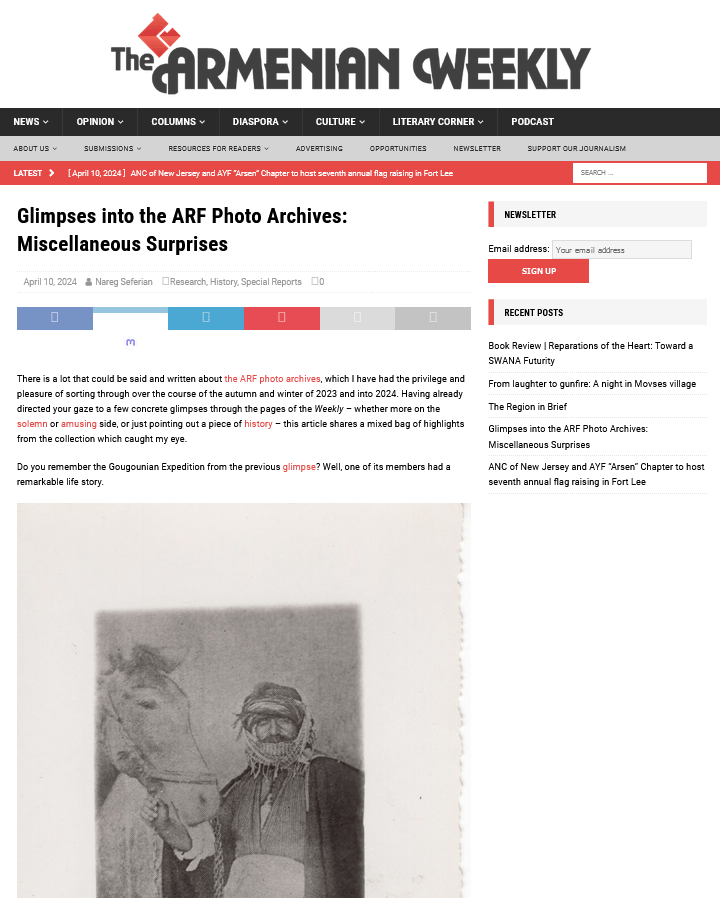
Do you remember the Gougounian Expedition from the previous glimpse? Well, one of its members had a remarkable life story.
 naregseferian.com